
About Us
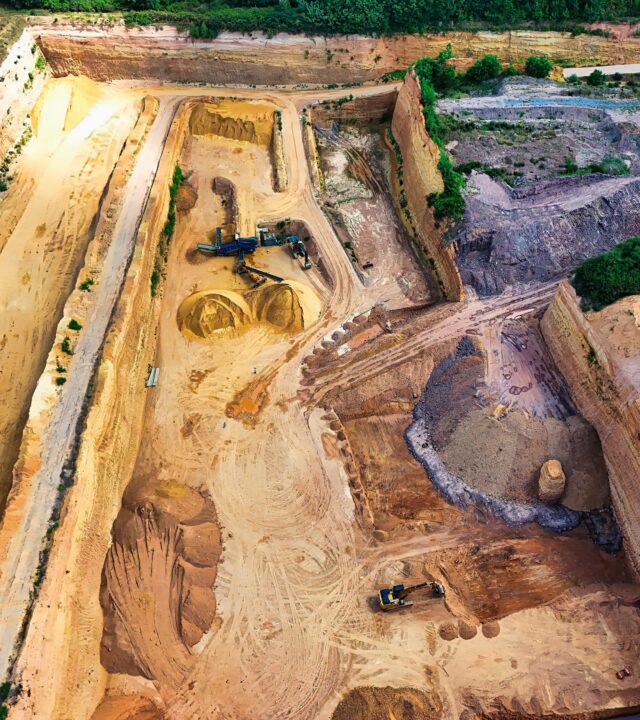
THE SAND PARADOX
Earth has 120 trillion tons of sand. We're running out of the right kind.
Global construction consumes 40–50 billion tons of sand per year.
Yet most of Earth’s sand is useless for building. Here’s why:
40–50Bt
Tons of sand consumed globally every year
30–40%
Of concrete by weight is sand
2nd
Most consumed resource on Earth, after water
WHY MOST SAND DOESN'T QUALIFY
Shape — the critical factor
Construction sand needs angular, jagged grains that interlock mechanically with cement. Desert sand has been tumbled by wind for millennia into smooth, rounded grains that simply slide past each other in concrete.
Grain size distribution
Good construction sand needs a specific blend of particle sizes to minimize air gaps and maximize density. Most natural deposits are too uniform — too fine, too coarse, or insufficiently graded.
Purity requirements
Salt corrodes steel reinforcement. Clay absorbs water and weakens concrete. Organic matter disrupts cement hydration. Many otherwise plentiful deposits fail on purity alone.
The transport barrier
(€20–27/t) to ship economically. Even large qualifying deposits in remote locations cannot relieve local shortages — sand only makes sense when it’s nearby.
Where qualifying sand comes from — and why that's a problem
The sand that does qualify is concentrated in riverbeds and specific coastlines — exactly where extraction is most ecologically damaging and increasingly illegal. River sand extraction is now banned or heavily restricted in India, China, Vietnam, and much of the EU.
Export Ban
import dependent
restricted extraction
DEMAND IS ONLY ACCELERATING
China used more concrete between 2011 and 2013 than the United States used in the entire 20th century. By 2050, 2.5 billion more people will live in cities — each built overwhelmingly from concrete.
Global urbanization means the gap between qualifying sand supply and construction demand will widen for decades. The result is a genuine, worsening scarcity of a material that appears, paradoxically, to be everywhere.
THE OPPORTUNITY
A viable synthetic substitute for construction sand — one that can be produced locally, at scale, from industrial waste — would address one of the least-discussed but most consequential resource constraints of the coming century.
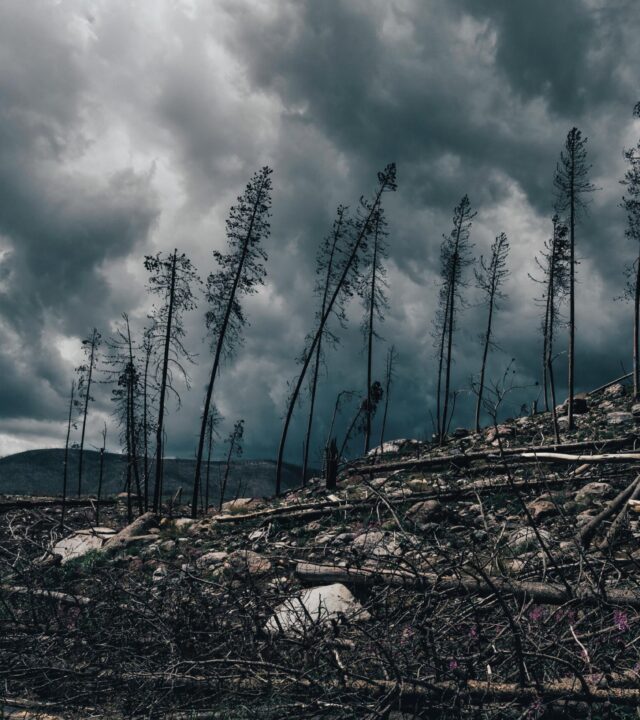
THE CASE FOR CARBON CAPTURE
Reducing emissions is necessary. It is not enough.
The atmosphere already contains too much CO₂. Some industries cannot reach zero. And the physics of carbon in the atmosphere means the problem does not self-correct on any human timescale. So carbon capture is the essential complement to reduction. Here is why capture is the essential complement to reduction:
THE BATHTUB ANALOGY
Emissions reduction
Turns down the tap. Slows the fill rate. Does not empty the tub. Does not address what is already there.
Carbon capture
Opens a second drain. Actively removes CO₂ already in the atmosphere. The only way to lower the water level.
A stable climate
Both are required. Neither alone is sufficient. The IPCC is unambiguous: every credible 1.5 °C pathway requires both.
WHY CO₂ IS UNIQUELY PERSISTENT
CO₂ does not break down. It accumulates.
Most air pollutants decompose relatively quickly. CO₂ does not. Once emitted, roughly 50% is absorbed by oceans and vegetation within decades — but the remaining 50% persists for centuries. Around 20% of any CO₂ pulse will still be warming the planet 10,000 years from now.
~12 yrs
Atmospheric lifetime of methane — it breaks down
centuries
Atmospheric lifetime of CO₂ — it does not break down
0.3–0.5 °C
Warming already committed even if all emissions stopped today
HARD-TO-ABATE SECTORS - WHERE CAPTURE IS THE ONLY TOOL
Roughly 30% of global emissions come from sectors where zero-emission alternatives either do not exist or are decades away from commercial viability.
Cement
CO₂ is released chemically as limestone converts to lime during production — a process emission no energy transition can eliminate.
Steel
High-temperature reduction of iron ore requires carbon at a chemical level. Hydrogen-based alternatives exist but are not yet at scale.
Aviation
Energy density requirements make battery-powered long-haul flight physically implausible for the foreseeable future.
Shipping
Container ships require fuels with enormous energy density. Electrification at scale remains a distant prospect.
For these industries, carbon capture is not an alternative to decarbonization. It is the only available tool.
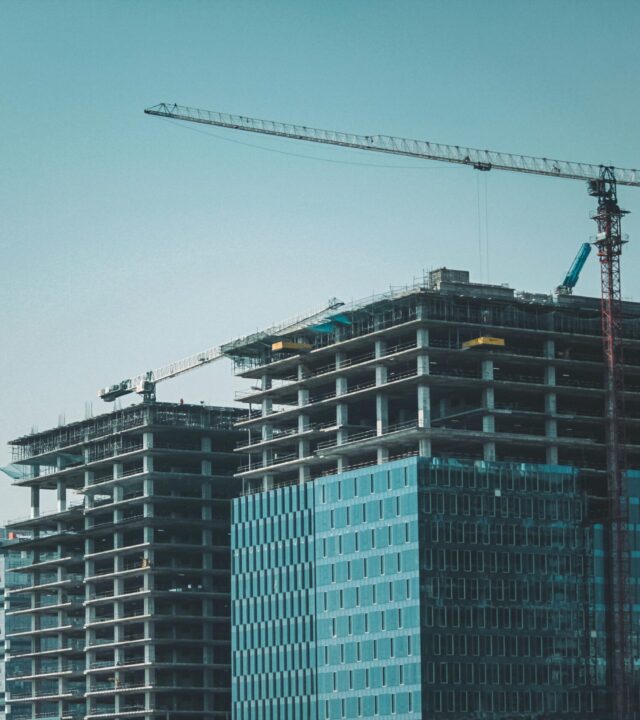
CO2MATERIALS
We turn industrial CO₂, waste into construction sand
A carbon-negative material that solves two crises at once: permanent CO₂ storage and global sand scarcity.
THE OPPORTUNITY
40–50Bt
Global sand demand per year — second only to water
$12.6B
CCUS market by 2035, growing at 23% per year
2-in-1
One process that addresses both markets simultaneously
HOW IT WORKS
CO₂ precursor
Industrial waste, CO₂ waste stream
proprietary process
Conversion to CO2Materials sand
CO₂Materials sand
Ready-to-use quartz substitute
Construction
Paving stones,
precast concrete